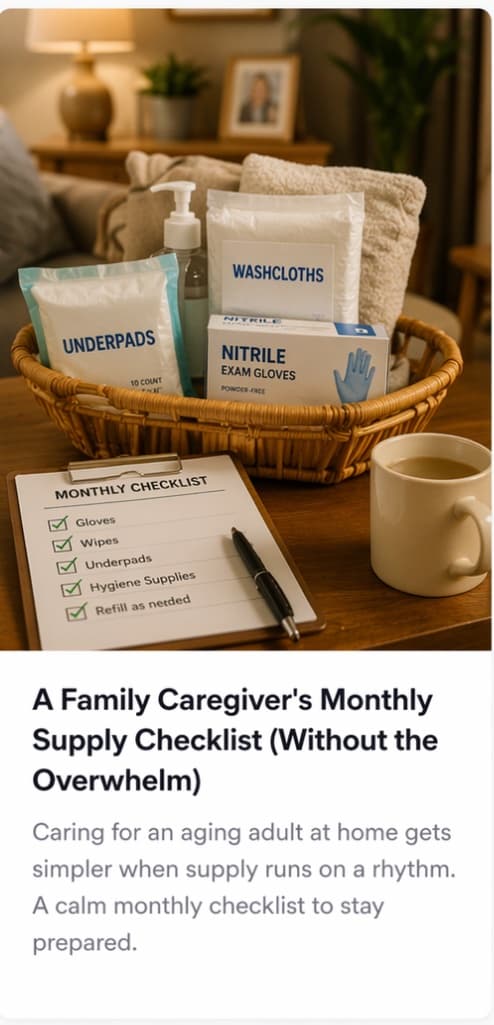
Caring for an aging parent or family member at home is rewarding and relentless in equal measure. One of the quieter stresses is supply: the running out of things at the worst moment, the half-finished mental list, the second trip to the store you did not plan for. The fix is not buying more. It is buying on a rhythm, so the house is always stocked without you having to think about it every day.
This is a calm, repeatable monthly checklist for the family caregiver. It covers the consumables that disappear fastest, a safe and comfortable home setup, and how to put replenishment on autopilot so the supply runs itself.
Start With a Rhythm, Not a Bigger Cart
The overwhelm rarely comes from any single item. It comes from tracking dozens of small things on different timelines in your head. A monthly rhythm replaces all of that with one predictable pass. You check the house once, top up what is low, and you are done until next month.
Pick one day a month: the same date every time, so it becomes a habit instead of a scramble.
Keep a short par list: for each consumable, write the quantity that means "comfortable for a month."
Hold a small buffer: a little back stock means a slow delivery never becomes an emergency.
The Consumables That Run Out First
These are the everyday items that get used without anyone announcing it. They are the usual cause of the surprise late-night trip, so they deserve a permanent spot on your list.
Personal care and hygiene: wipes, disposable gloves, skin-friendly cleansers, and lotion for daily comfort.
Incontinence and bedding protection: the single most common item to underestimate; keep generous back stock.
Cleaning and freshness: surface wipes, laundry support, and odor control for a calm, clean room.
Paper and disposables: the quiet basics that vanish faster than expected with daily care.
Basic first-aid: bandages, antiseptic, and gauze for the small bumps and scrapes of daily life.
Treat anything on this list that you have run out of even once as a high-buffer item. The cost of an extra pack is trivial next to the stress of running dry.
Set Up the Home for Safety and Comfort
A good setup prevents problems before they start and makes daily care easier on everyone. Most of it is a one-time effort with small refreshes over time.
Reduce Fall Risk
Clear walking paths and remove loose rugs or cords that catch a foot.
Add grab support near the bed, the bathroom, and any step or transition.
Improve lighting on routes used at night, and keep a reachable light by the bed.
Make sure non-slip footwear is available and in good shape.
Make Daily Routines Easier
Keep frequently used items within easy arm's reach to avoid stretching or bending.
Set up one organized station for personal care so nothing is hunted for mid-task.
Use seating or support that makes standing and sitting safer and less tiring.
Keep a simple way to call for help close at hand at all times.
Your Monthly Caregiver Checklist
Run this on your chosen day each month. It is meant to be quick, not exhaustive. The goal is a steady supply and a safe room, not perfection.
Walk the home and count each consumable against its par level.
Top up anything low, and replace anything used from your buffer.
Check expiration dates on first-aid and personal-care items.
Do a quick safety sweep: paths clear, lighting working, supports secure.
Restock the personal-care station so the next month starts organized.
Note anything that ran short and raise its par level for next time.
Confirm next month's delivery is set so you never have to reorder under pressure.
Put Replenishment on Autopilot
The single biggest reduction in mental load comes from not having to reorder at all. A standing monthly delivery of your core consumables means the supply simply arrives. You stop tracking, stop second-guessing, and free up energy for the part that actually matters, which is the care itself.
Build the standing order from your par list: the quantities you already know cover a comfortable month.
Time the delivery to your check day: so fresh supply lands right when you do your monthly walk-through.
Revisit it seasonally: needs shift over time, and a quick adjustment keeps the order matched to real use.
Protect Your Own Capacity
A supply rhythm is really a tool for sustainability. Caregiver burnout often builds from a thousand small logistical cuts, not one big crisis, and removing the supply guesswork takes a real share of that load off your shoulders. A stocked home is calmer for everyone in it.
Lower the daily decision count: fewer "are we out of that?" moments across the week.
Avoid emergency trips: a buffer turns an out-of-stock from a crisis into a non-event.
Share the system: a written par list and a known delivery mean another family member can step in without relearning everything.
How DLM Helps
DLM Solutions Group built its family-care bundles around exactly this rhythm. The Family Caregiver Starter Bundle ($219) gets a home set up from scratch with the core consumables and personal-care basics in one box, so you are not assembling a list from nothing. The Mobility & Safety Bundle ($229) covers the home-setup side, supporting safer movement and fall-risk reduction around the bed, bath, and walking paths. And the Monthly Replenishment — Adult Care ($239) is the autopilot: a predictable monthly refill of the consumables that run out first, so the house stays stocked without another thing on your list.
Everything ships within the US. See the full range at dlmsolutionsgroup.com/supplies, and if you are caring across more than one household, ask about bulk pricing on our quotes page.
DLM Solutions Group has helped families keep care simple and supplied since 2022.